
Such age-old historical sword remains a remarkable piece of craftsmanship, but assume you need to manifest your distinct manner? Adapting your tool is a rewarding journey, allowing you to design a truly matchless piece. From the hilt wrapping and sheath to the protector design and marking, each component offers a chance for unique expression. This analysis delves into the area of katana customizations, providing tips for both apprentices and accomplished enthusiasts seeking to set their endorsement on the historic art of the samurai.
Starter True Artistry
For starters motivated to embark on the fulfilling journey of historical swordplay, 1060 steel katanas provide an superior entry point. This selected grade of carbon steel meets a ideal mix between low price and quality . While less than hard as elite steels, 1060 provides a reasonable level of honing , making it ideal for apprentices to enhance the groundwork of blade care and enjoy the charm of original Japanese weaponry. It’s a remarkable choice for obtaining experience without the economical burden of more enhanced steels.
Grade T10 Katanas : Balancing Performance and Price
To help hobbyists seeking an authentic sword experience without exceeding the budget , T10 alloy katanas represent a compelling option. These tools offer a noticeable improvement in durability compared to middling alternatives, exhibiting reasonable edge retention and satisfactory flexibility for initial hacking techniques. While not rivaling the excellent characteristics of elite steels like T100 or folded material , T10 provides a worthwhile blend of performance and value , making them a well-liked choice for trainees and those on a controlled earnings .
Transcending the Blade : Enhancing Your Edge's Components and Handle
While the smoothed cutting edge is undeniably the main point of a katana, truly refining its magnificence lies in the precise customization of its components and tsuka . This approach allows admirers to showcase their inimitable manner . Explore the wide possibilities: menuki - decorative appliqués that bring visual interest ; the hamon sheaths – often masterfully etched ; the tsuka basis itself, wrapped in authentic ito binding ; and the fusa knob , which can be designed from various resources like precious metals or cartilage .
- Opt for ideas that harmonize with you.
- Delve into with multiple materials .
- Stress quality for a persistent impression .
At last , customizing these elements transforms a splendid weapon into a truly individualized work of mastery.
The Charm of the Katana: Heritage, Workmanship, and Metal
That katana retains a incomparable allure, steeped in ages of oriental history and ancestry. More than merely a implement of military action , it's a symbol of the bushi ethos – a fusion of ability and discipline . Its progression spanned countless generations, with early arms evolving into the elegant curvature and dangerous edge we accept today. The craftsmanship involved is truly exceptional , requiring spans of preparation to perfect . The process involves a detailed folding of smelted iron , creating layers that augment the sword’s flexibility and cleaving ability. Distinct schools of manufacturing were established, each with their individual secrets and styles for achieving the finest harmony and crispness - a truly laborious pursuit.
- Initial Katana models
- The significance of the oriental sword in knight culture
- Conventional processing methods
Selecting the Best Steel for Your Japanese Sword Project: 1060 vs. T10
Deciding on the suitable steel is vitally important for any cutting weapon project, and the determination between 1060 and T10 can be difficult. 1060 is a favored American material, offering a acceptable balance of toughness and hardiness, rendering it somewhat easy samurai sword to work. However, T10, a from Japan steel, usually boasts better wear resistance and can perhaps achieve a amplified end hardness, although it can be substantially complex to operate and requires exact heat tempering. Consider your skillset and intended goals: for a learner, 1060 may be a more straightforward launchpad, while the seasoned smith might favor the additional merits of T10.
- User-friendliness of Applying
- Friction
- Peak Hardness
Unleashing the Power: High-Level Katana Modification Methods
Perfecting the skill of sword tuning extends far beyond basic stropping. Serious masters are now investigating advanced techniques to truly expose a blade's hidden potential. This comprises intricate work with the temper pattern, utilizing specialized compositions for differential condition and carefully determining the design of the defense plate to optimize balance and handling. Beyond purely functional enhancements, artisans are increasingly focused on reaching unparalleled aesthetic appeal, through complex etching and layered films that truly transform a katana into a creation.
From Elemental Metal to Artistry: Forging a 1060 Blade
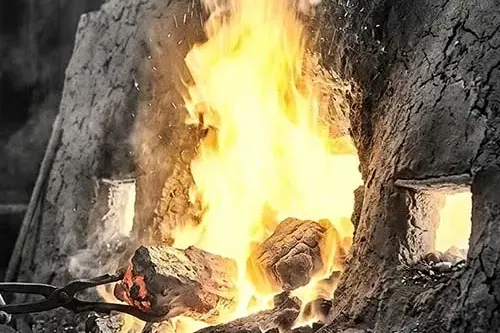
The journey embarks with typical 1060 substance, a resilient material far lacking the elegant katana it will develop into. Adept bladesmiths perform a complicated process of uniting and crafting the primary steel, repeatedly raising it and impacting it to eliminate impurities and generate a consistent grain structure. This demanding process, often stretching for weeks , builds the imperative strength and elasticity characteristic of a original Japanese blade . Extra heat manipulations , including accurate hardening and conditioning , are indispensable to achieve the intended steadiness of sharpness, robustness and beauty .
- Stacking: Lowers impurities and establishes grain structure.
- Shaping: Designs the steel into the initial blade form.
- Curing: Directs the final hardness and flexibility.
The Everlasting Fascination of the Katana: Broad Investigation of Metalcraft and Adjustment
The classic katana endures a forceful symbol signifying Japanese style , its appeal far extending beyond mere martial implements . Forged from exclusive steel and regularly featuring intricate ornaments , the way of creation itself is a celebrated art. Beyond the fundamental craftsmanship, the ability to personalize a katana - from the temper line to the handle wrapping and guard - permits for a authentically individual manifestation for both devotees and operators alike. This union of legacy steelwork and boundless personalization brings the katana's continued presence across the terra .
Comments on “Should you create a narrative collection of katana themed around elements?”